
Elon Musk's Perspective on Simulation Theory

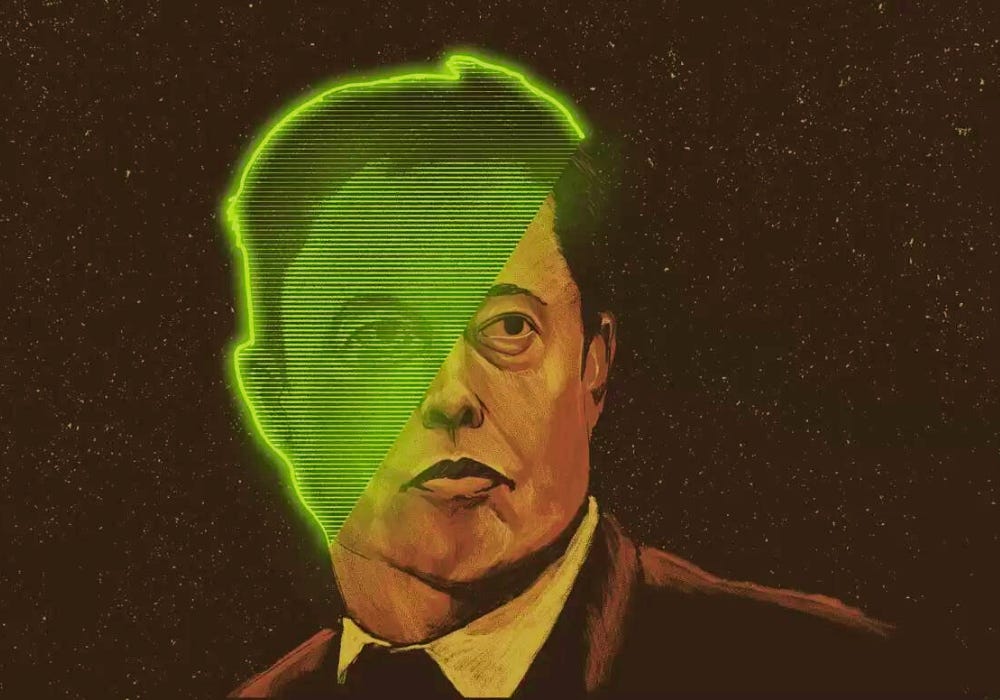
Elon Musk, a name synonymous with groundbreaking innovations in the tech world, has often ventured beyond the realms of electric cars and space exploration. One such venture is his perspective on the simulation theory, a concept that challenges our understanding of reality. Musk believes our reality may not be as real as we think, supporting an ancient theory.
This text explores Musk's thoughts on the simulation theory. It looks at its origins, implications, and broader context. As we discuss this topic, we'll strive to show a fair perspective, based on evidence and without exaggeration.
What is Simulation Theory?
Simulation theory posits that our reality, as we know it, might be a computer-generated environment. This idea isn't new; philosophers have long questioned the nature of reality and our perception of it. However, with the advent of advanced computing and virtual reality, this theory has gained traction, suggesting that if we can create lifelike simulations now, perhaps our own reality is someone else's simulation.
Elon Musk's interest in this theory isn't merely a passing thought. He has often cited the rapid advancements in video game technology as evidence. A few decades ago, video games were simple pixelated graphics, but today, they offer hyper-realistic environments. Who knows, in the future, we might be able to create simulations that look just like real life.
Yet, it's not just technological progress that supports this theory. Musk often refers to statistical arguments. They suggest that if we can create simulations, there would be countless running. In such a scenario, the odds of us being in the one "base reality" are almost infinitesimal.
In conclusion, the simulation theory is still debated. Musk's arguments are thought-provoking. As we explore technology and knowledge, the line between reality and simulation may become unclear. This might make us wonder about our existence.
Elon Musk's First Mention of Simulation Theory
Elon Musk's foray into the realm of simulation theory wasn't a sudden revelation. His thoughts on this topic have been a subject of interest for many, especially given his stature in the tech industry.
It was during a 2016 interview at the Code Conference where Musk first publicly broached the subject. He posited that the rapid evolution of video game technology, from Pong's two rectangles and a dot to photorealistic 3D simulations, indicates a trajectory leading to simulations indistinguishable from reality. If such a trajectory continues, Musk argued, it's more likely we're currently in a simulation than not.
In addition to technological progress, Musk's reasoning also considered probability. If one assumes any rate of improvement at all, then games or simulations will become indistinguishable from reality. Our reality is likely one of many simulations created by advanced civilizations in the vast universe.
Musk's initial mention of the simulation theory sparked widespread discussion and debate. While some dismissed it as mere speculation, others saw it as a profound insight into the nature of our existence. No matter what side you're on, Musk's perspective has brought something new to an old question.
Musk's Arguments in Favor of Simulation Theory
Beyond his initial mention, Musk has elaborated on his views regarding simulation theory, providing more depth and context to his beliefs.
One of Musk's primary arguments hinges on the exponential growth of technology. He compares video game progress to simulated reality, saying it will happen soon. If a civilization becomes capable, they could run many simulations, making it likely we're in one.
Furthermore, Musk often alludes to the concept of "base reality" - the true, un-simulated reality. He believes that if we accept the idea of advanced civilizations running simulations, the chances of us being in the real world are very slim. This argument is simple but it gives a strong perspective on the chance of us living in a simulation.
While Musk's arguments are rooted in technological and statistical reasoning, they also touch upon deeper philosophical questions about existence and reality. His unique perspective makes us question how we see the world.
Implications of Accepting Simulation Theory
Accepting the simulation theory could affect Musk's decision-making personally and for civilization. If our world is just a simulation, it could change how we think about important topics like ethics and death. Musk himself, driven by a relentless pursuit of innovation, might see his ventures like SpaceX or Neuralink in a different light, considering them as endeavors within a predetermined simulation.
If society were to accept the idea of a simulated reality, it could change cultural beliefs. Our understanding of the universe could change, leading to new ways of thinking.
The implications of the simulation theory, as presented by Musk, are profound. They challenge the foundational beliefs of our society and urge us to navigate the complex interplay between technology, philosophy, and existence. Whether one agrees with Musk or not, it's a perspective that demands contemplation.
Elon Musk Explains Simulation Theory in Depth
In various interviews and discussions, Musk has expanded on the nuances of the simulation theory. He compares video game development to advanced civilizations creating hyper-realistic simulations. For Musk, the mere fact that we can envision creating such simulations in the future gives credence to the idea that we might already be in one.
Beyond the technological aspect, Musk delves into the philosophical implications of the theory. He ponders on questions of consciousness, existence, and the nature of reality. If we are in a simulation, what does it mean for our understanding of consciousness? Are we mere lines of code, or do we possess a deeper, intrinsic value?
Musk explores the simulation theory with technology and philosophy. His thoughts serve as a catalyst for broader discussions on the nature of our existence and the mysteries of the universe.
Counterarguments and Skepticism
No theory, however compelling, is without its skeptics. The simulation theory, despite Musk's endorsement, has its fair share of critics.
Many scientists and philosophers argue against the plausibility of the simulation theory. They point to the lack of empirical evidence and the immense computational power required to run such a detailed simulation. Some people wonder why an advanced civilization would want to simulate our reality.
Musk is willing to talk, but he disagrees by saying technology is advancing quickly. What seems impossible now might be feasible in the future. Moreover, he suggests that the very fact we're contemplating this theory could be an indication of its validity.
The debate around the simulation theory is a testament to its intriguing nature. Musk has an interesting viewpoint. Keep an open mind and consider both sides equally.
Broader Implications in the Tech World
Elon Musk isn't the only figure in the tech world to contemplate the simulation theory. The concept has resonated with many, leading to diverse reactions and implications.
The tech industry, known for its forward-thinking ethos, has shown keen interest in the simulation theory. Some view it as a potential roadmap for future innovations, while others see it as a philosophical concept with little practical application. Inspired by the simulation theory, creating virtual realities has led to investments and research in VR and AR.
Comparatively, other tech leaders have shared their views on the subject, either aligning with Musk or offering differing perspectives. Some people agree with Musk, but others are skeptical and want evidence and practical uses.
The simulation theory's ripple effect in the tech world underscores its significance. Tech leaders are struggling with the implications of the theory. It's clear that the theory has led to both innovation and self-reflection.
Comparison with Other Tech Leaders' Views
Elon Musk's perspective on the simulation theory, while influential, is just one among many in the tech world. Other tech magnates have weighed in on the topic, each bringing their unique viewpoint to the table.
Bill Gates, for instance, has been more reserved when discussing the simulation theory. He recognizes technology is advancing quickly, but wants proof before accepting new ideas. However, Mark Zuckerberg has shown interest in virtual and augmented realities. He has not explicitly endorsed the simulation theory. Instead, he focuses on the potential of these technologies to enhance human connection and experience.
These varied perspectives highlight the diversity of thought within the tech industry. Some people think the simulation theory explains our existence, but others are cautious and want evidence.
The discourse around the simulation theory in the tech world is as varied as it is fascinating. While Musk's views have certainly amplified the discussion, it's essential to consider the broader spectrum of opinions to gain a holistic understanding.
Cultural and Societal Impact
Beyond the confines of the tech world, the simulation theory, bolstered by Musk's comments, has permeated popular culture and societal discourse, influencing various domains.
Movies, literature, and art have long explored themes of reality, consciousness, and existence. The simulation theory has added a fresh layer to this exploration. Films like "The Matrix" resonate with the idea, even if they predate Musk's comments. The theory has also influenced contemporary literature, with authors weaving narratives around simulated realities and questioning the nature of existence.
On a societal level, the simulation theory challenges established beliefs and paradigms. It connects with beliefs in philosophy and religion, leading to discussions about reality, free will, and the purpose of life. While some find it unsettling, others see it as an opportunity for introspection and growth.
The cultural and societal reverberations of the simulation theory underscore its profound impact. It's not just a tech-centric concept but a lens through which we can re-examine our beliefs, values, and perceptions.
Conclusion
The journey through Elon Musk's perspective on the simulation theory has been both enlightening and thought-provoking. As we come to the end of this exploration, it's important to think about the wider meaning of this theory.
Musk's endorsement of the simulation theory has undeniably amplified its reach and influence. His arguments, rooted in technological advancements and statistical probabilities, offer a compelling case. Yet, as with any theory, it's crucial to approach it with an open mind, considering both supporting arguments and counterpoints. Beyond Musk, the tech world, and popular culture, the simulation theory invites each of us to ponder the nature of our reality. It challenges our perceptions, beliefs, and the very essence of our existence.
As technology advances, the simulation theory reminds us of the mysteries we still don't understand. Whether we subscribe to it or not, it encourages introspection, dialogue, and a quest for understanding. As we navigate the complexities of our existence, theories like this remind us to always question, explore, and seek the truth.
Elon Musk is a fraud. He invented nothing. He came with apartheid diamond mining cash and bought into paypal and tesla.
He's douchebag
Hill views are evolving, possibly converging with my FUTURIST POV: also, mathematical proofs often cited only prove the math (circular) no epistemological basis (prove me wrong). Maths are themselves closed systems - not “real” epistemologically. Moreover tell me if the logical basis of the math is binary (B) or quaternary (Q). If Q maybe worth time and paper, otherwise, meh.. full chapter here on Substack, S6 is most relevant: https://open.substack.com/pub/ronaldingram/p/chapter-10-gurdjieffian-journey-from?r=2xhreu&utm_medium=ios&shareImageVariant=overlay